Insights
Read-aloud apps are not podcasts, and your newsletter pile knows the difference
Read-aloud apps read newsletters word for word, ads included. A daily podcast summarizes across the whole pile, so read-aloud never shrinks it.
You want to stay informed without screen time. That is the whole job. Your favorite newsletter arrives in the morning, and instead of reading it on a screen, you would rather just hear it.
So you try a read-aloud app. The phone reads it to you. Problem solved. Except two weeks later your unread count is higher than when you started. The app worked exactly as advertised yet the pile grew anyway…
The short answer
Read-aloud apps are not podcasts. A read-aloud app reads one article word for word, including the ads, the photo captions, and the unsubscribe footer. A daily podcast summarizes and converses across your whole stack of newsletters, keeping what matters and skipping the rest. That is the difference, and it is why read-aloud never shrinks the pile. It is free or cheap and perfectly good for a single article. It just does not solve the inbox.
Why read-aloud cannot touch the pile
Read-aloud is linear. If one newsletter takes ten minutes to read aloud, twenty take three hours. Playing it at 2x does not change the math. It just plays the ads faster.
Do the math on a real morning. Say you subscribe to fifteen newsletters and the average issue takes eight minutes read aloud. That is two hours of audio a day. Nobody listens to two hours of newsletter audio.
On top of that, each article is manual. Open it, paste it in, press play. Nothing arrives on its own. No feed, no schedule, no episode waiting for you by 7am.
It also fragments your attention into fifteen separate listening sessions. Each one needs a decision: open, paste, play. By the fourth you are checking your phone between articles, and by the tenth you have stopped.
What the read-aloud options actually cost
Free options exist, and work well for their intended use.
- Speechify. Speechify costs $139 per year or $29 per month for Premium. The free plan covers the basics: ten voices and speeds up to 1.5x. Premium also has an AI Podcasts feature that turns a document you pick into an audio briefing, though it has no daily feed and no newsletter hookup. (Prices rechecked 2026-10-02.)
- ElevenReader. ElevenReader from ElevenLabs has a free tier with 10 hours of listening a month, and the Ultra plan with unlimited listening is $8.25 per month on annual billing. (Prices rechecked 2026-10-02.)
- iPhone Speak Screen. Free and already on your phone. Turn it on under Settings, Accessibility, Spoken Content, then swipe down with two fingers to have the screen read aloud. Apple's official steps are one screen and no signup.
For a single article, any of these is fine. It costs nothing and takes ten seconds to start.
What a podcast does instead
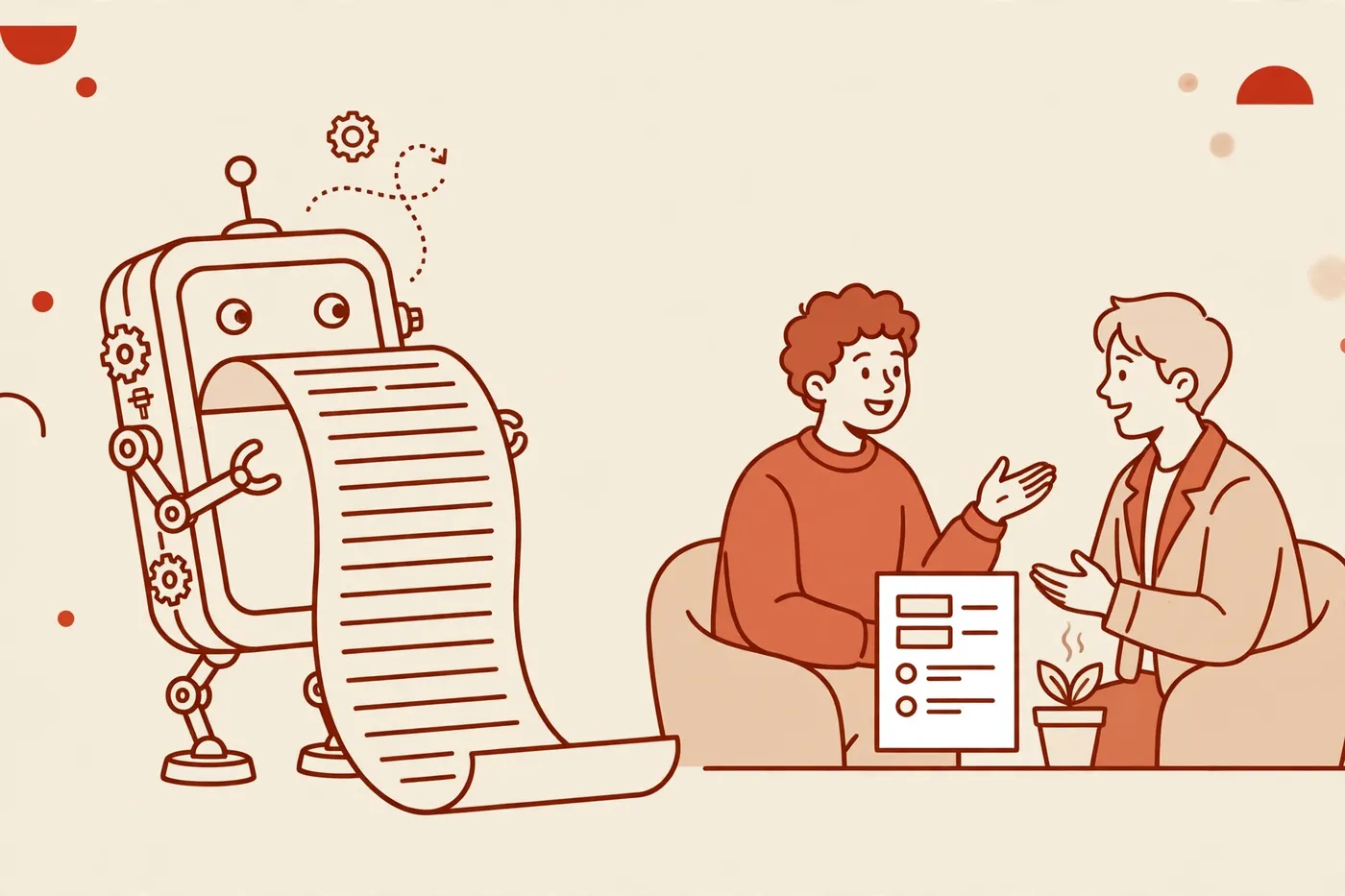
A podcast is an editorial product: two hosts read across everything that arrived, pick the stories that matter, summarize them, and talk it through. Like a morning radio show about your inbox.
It crosses newsletters. One Monday morning, four of my newsletters led with the same chip-export story. The podcast tells it once, with the best detail from any of the four, then moves on. Read-aloud reads all four versions, footer to footer. One of those is a good use of six minutes. The other is a good use of forty.
It also skips the boilerplate nobody reads anyway. The sponsor block, the "forward to a friend" box, the author's bio repeated for the hundredth time. A read-aloud app reads everything flat, because that is its job.
For transparency's sake (even though you're on this page, so it's kind of expected…): I built Harkwire, which takes the newsletters you forward, turns them into a short episode, and drops it in your private podcast feed. My own episode lands by 7am every morning. I compared all three ways to turn newsletters into audio in the hub guide, if you want the full breakdown.
The fine print, same as always. Only free newsletters are supported so far. And the private feed will not play in Spotify, which does not accept feeds added by URL.
Back to the job: staying informed without screen time
Read-aloud maximizes consumption. A digest maximizes coverage per minute. With fifteen newsletters in the pile, a three-to-six-minute episode covers the morning. Read-aloud needs the better part of the morning.
But the job is not "listen to text." The job is staying informed without screen time, every day, without the pile deciding what you miss. Measure every option against that, and the answer changes with the size of the pile. One favorite newsletter: read-aloud wins on price and simplicity. Fifteen? It's not even close.
So which one is for you?
- One article, right now: use Speak Screen or a free app tier. Free, instant, no signup.
- The whole pile, every morning: use something that summarizes across newsletters into a single feed.
The read-aloud app is a faithful narrator. It will read everything you never had time for, in full, including the parts you would have skimmed. Your pile does not need a narrator - it needs an editor.